



























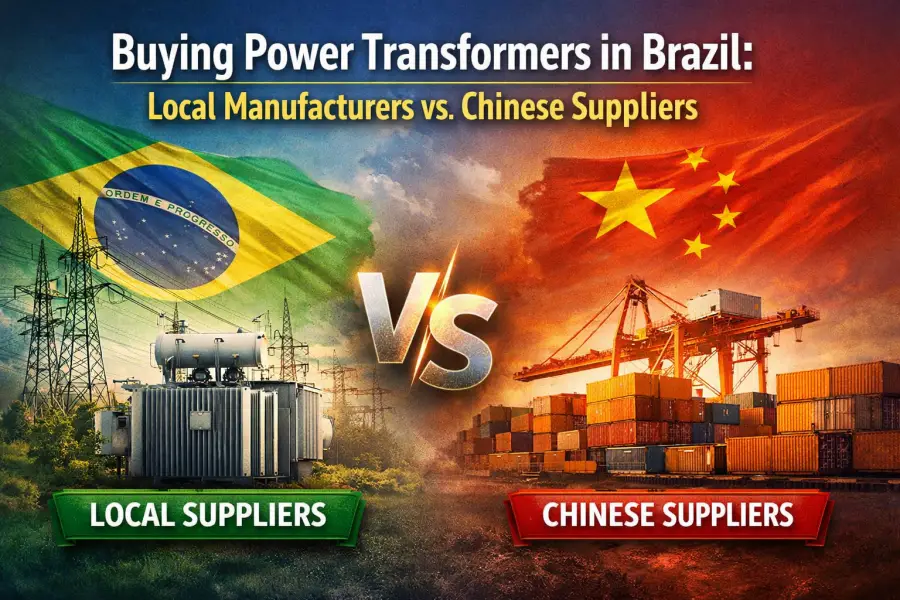
Introduzione: Perché il Brasile è un mercato strategico per i trasformatori
Il Brasile è il più grande mercato elettrico del Sud America e uno dei mercati delle infrastrutture elettriche in più rapida crescita a livello globale. Con i massicci investimenti in parchi solari, parchi eolici, sottostazioni, espansione della rete e elettrificazione industriale, la domanda di trasformatori affidabili ed economici continua a crescere.
Per gli appaltatori EPC, le utility e gli sviluppatori di energia rinnovabile, la scelta del giusto fornitore di trasformatori può determinare la consegna di un progetto nei tempi e nel budget previsti. In Brasile, gli acquirenti scelgono tipicamente tra produttori locali e fornitori internazionali, soprattutto cinesi.
Questa guida mette a confronto entrambe le opzioni per aiutarvi a prendere la decisione di acquisto migliore.
Produttori brasiliani di trasformatori - Punti di forza e limiti
Vantaggi dell'acquisto locale
1. Conformità locale e familiarità con gli standard brasiliani
I produttori brasiliani hanno esperienza con Standard elettrici ABNT / NBRche semplifica l'approvazione normativa e le ispezioni.
2. Assistenza post-vendita e sul campo più semplice
Le fabbriche locali possono fornire più rapidamente ispezioni in loco, assistenza in garanzia e pezzi di ricambio.
3. Nessun processo doganale di importazione
L'acquisto di prodotti nazionali evita licenze di importazione, ritardi nei porti e burocrazia doganale.
Le sfide dei fornitori locali
1. Tempi di consegna lunghi
A causa della limitata capacità di produzione e dell'elevata domanda, i tempi di consegna possono raggiungere 8-24 mesisoprattutto per i trasformatori personalizzati o ad alta tensione.
2. Prezzi elevati
I costi di produzione locali in Brasile sono significativamente più alti a causa di manodopera, tasse, logistica e prezzi delle materie prime. Ciò comporta un aumento dei prezzi delle attrezzature.
3. Flessibilità di personalizzazione limitata
I produttori di piccole e medie dimensioni spesso si trovano a dover affrontare progetti specializzati, tensioni non standard o configurazioni di trasformatori specifiche per le energie rinnovabili.
Fornitori cinesi di trasformatori - Vantaggi e rischi
La Cina è la più grande base di produzione di trasformatori al mondo, e fornisce apparecchiature a Nord America, Sud America, Europa, Medio Oriente e Africa.
Vantaggi principali
1. Costo molto più basso
Grazie alla produzione su larga scala e alle catene di approvvigionamento verticalmente integrate, i produttori cinesi possono offrire 30-60% prezzo inferiore rispetto ai fornitori brasiliani.
2. Produzione e consegna più rapide
I cicli di produzione tipici vanno da Da 4 a 8 settimanee la consegna totale (compresa la spedizione) è spesso 60-90 giorni, molto più velocemente dei fornitori locali.
3. Forte capacità di personalizzazione
I produttori cinesi possono produrre trasformatori per:
-
Fattorie solari ed eoliche
-
Impianti industriali
-
Reti di distribuzione delle utility
Supportano anche Progettazioni compatibili con IEC, ANSI, IEEE e NBR.
4. Test e documentazione completi
Le fabbriche cinesi affidabili forniscono:
-
Test di accettazione in fabbrica (FAT)
-
Rapporti di prova del tipo
-
Certificati di test di routine
-
Opzioni di ispezione da parte di terzi
Questi documenti sono accettati dalle aziende di servizi pubblici, dagli EPC e dai finanziatori.
Sfide potenziali
1. Importazione e processo doganale
Gli acquirenti brasiliani devono gestire:
-
Licenza di importazione
-
Imposte e dazi
-
Sdoganamento
Tuttavia, la maggior parte degli esportatori esperti fornisce Supporto completo per la spedizione e la documentazione.
2. Coordinamento dei servizi in loco
Mentre Produttori cinesi fornire assistenza tecnica a distanza, la messa in funzione e la manutenzione locale possono richiedere partner di assistenza brasiliani.
3. Pianificazione logistica
Il trasporto marittimo richiede una programmazione adeguata, ma con una pianificazione corretta questo rischio è gestibile.
Confronto: Fornitori di trasformatori brasiliani e cinesi
| Fattore | Produttori brasiliani | Fornitori cinesi |
|---|---|---|
| Prezzo | Alto | 30-60% inferiore |
| Tempi di consegna | 8-24 mesi | 60-90 giorni |
| Personalizzazione | Limitato | Molto flessibile |
| Standard | Principalmente NBR | IEC, NBR, ANSI, IEEE |
| Gamma di prodotti | Medio | Molto ampio |
| Servizio locale | Forte | Tramite partner o in remoto |
Qual è l'opzione migliore per il vostro progetto?
Per il vostro progetto, dovreste prendere in considerazione i fornitori cinesi:
-
Ha vincoli di bilancio
-
Esigenze consegna veloce
-
Richiede progettazione personalizzata di tensione, impedenza o energia rinnovabile
-
Fa parte di un progetto di espansione solare, eolica o di trasmissione
Potreste preferire i fornitori brasiliani se:
-
Le norme sugli appalti pubblici locali richiedono l'approvvigionamento nazionale
-
Avete bisogno di un'assistenza immediata in loco
-
Il vostro progetto è piccolo e urgente
Per la maggior parte impianti solari su scala industriale, sottostazioni e progetti EPCL'approvvigionamento cinese offre il miglior equilibrio tra costo, velocità e capacità tecnica.
Come acquistare trasformatori dalla Cina per il Brasile
Per garantire il successo:
-
Confermare in anticipo le specifiche tecniche
Tensione, potenza nominale, tipo di raffreddamento, classe di isolamento e standard (IEC / NBR / ANSI). -
Richiesta di test e documentazione completa
FAT, test di routine, disegni e liste di imballaggio. -
Lavorare con esportatori esperti
Scegliete fornitori con comprovata esperienza nelle spedizioni in America Latina e nella conformità. -
Pianificare in anticipo dogane e tasse
Il fornitore deve fornire i codici HS, i certificati di origine e i documenti di spedizione.
Pensieri finali
L'infrastruttura elettrica brasiliana è in rapida espansione, grazie alle energie rinnovabili e alla modernizzazione della rete. Sebbene i produttori locali offrano vicinanza, i fornitori cinesi offrono prezzi migliori, tempi di consegna più rapidi e una maggiore personalizzazione, diventando così la scelta preferita per molti progetti energetici e di pubblica utilità su larga scala.
Se state pianificando l'acquisto di un trasformatore per il Brasile, la scelta del fornitore giusto può ridurre i costi di decine di migliaia di dollari e far risparmiare mesi di tempo al progetto.
Per consulenze o preventivi specifici per il progetto, produttori professionali come Energy Power Transformer possono fornire indicazioni tecniche, supporto ai test e soluzioni pronte per l'esportazione per il mercato brasiliano.