


























Introduzione
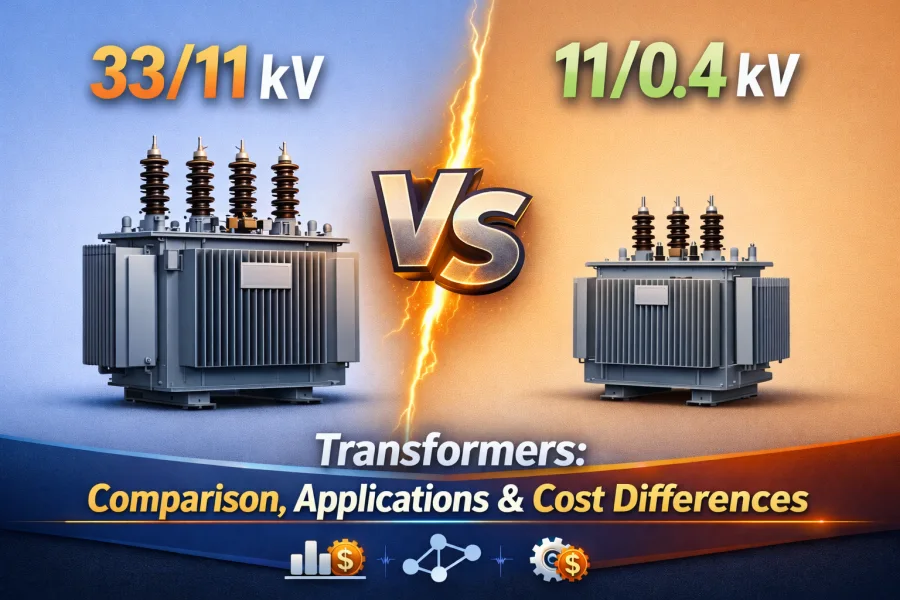
Nei moderni sistemi di distribuzione dell'energia, la scelta del trasformatore giusto è fondamentale per l'efficienza, la sicurezza e l'economicità. Due dei tipi di trasformatori più comuni nelle reti a media e bassa tensione sono Trasformatori 33/11 kV e Trasformatori 11/0,4 kV. Anche se a prima vista possono sembrare simili, le loro applicazioni, le specifiche tecniche e i costi differiscono notevolmente.
Per gli acquirenti industriali, le utility e gli appaltatori EPC, la comprensione di queste differenze è essenziale per ottimizzare sia il CAPEX che l'OPEX. In questa guida vi spieghiamo tutto quello che c'è da sapere su questi trasformatori, aiutandovi a prendere decisioni di acquisto informate.
Che cos'è un trasformatore da 33/11 kV?
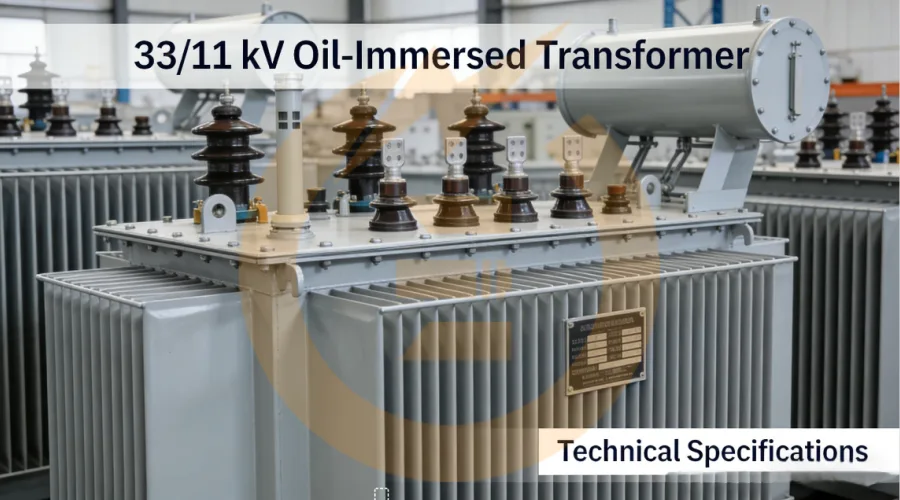
Trasformatori 33/11 kV sono tipicamente trasformatori step-down di media tensione (MT) utilizzati nelle reti di distribuzione elettrica per ridurre la tensione da 33 kV a 11 kV. Essi fungono da collegamento cruciale tra le linee di trasmissione ad alta tensione e le sottostazioni di distribuzione locali.
Caratteristiche principali:
-
Tensione primaria: 33 kV
-
Tensione secondaria: 11 kV
-
Gamma di capacità: In genere da 500 kVA a 10 MVA
-
Tipo di raffreddamento: A bagno d'olio (ONAN/ONAF) o a secco
-
Applicazioni: Sottostazioni, complessi industriali, reti di distribuzione urbane
Vantaggi per le applicazioni B2B:
-
Elevata capacità di carico: Gestisce in modo efficiente grandi carichi industriali.
-
Prestazioni stabili: Assicura una caduta di tensione minima nelle reti di distribuzione.
-
Lunga durata: Di solito sono progettati per 25-30 anni di funzionamento.
Che cos'è un trasformatore da 11/0,4 kV?
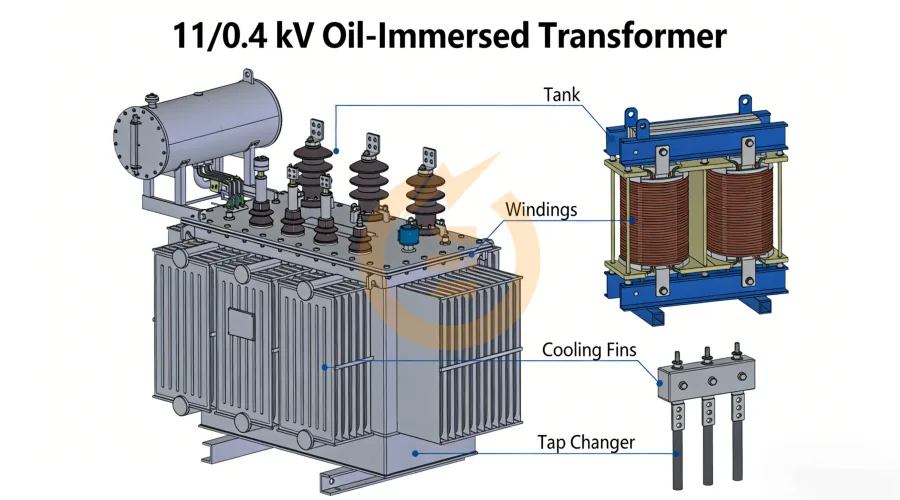
Trasformatori 11/0,4 kV sono trasformatori step-down a bassa tensione (LV), utilizzato per ridurre la tensione di distribuzione a 11 kV a livelli di utilizzo standard, in genere 400/230 V, adatti a carichi residenziali, commerciali e industriali di piccole dimensioni.
Caratteristiche principali:
-
Tensione primaria: 11 kV
-
Tensione secondaria: 0,4 kV (400/230 V)
-
Gamma di capacità: Da 50 kVA a 2.500 kVA
-
Tipo di raffreddamento: Immersi in olio o tipo a secco
-
Applicazioni: Impianti industriali, edifici commerciali, quartieri residenziali
Vantaggi per le applicazioni B2B:
-
Usabilità diretta: Alimenta apparecchiature, macchinari e illuminazione senza necessità di ulteriori step-down.
-
Design compatto: Facile installazione in sottostazioni urbane o impianti industriali.
-
Efficienza dei costi: CAPEX inferiore rispetto ai trasformatori a tensione più elevata.
Principali differenze tra i trasformatori da 33/11 kV e 11/0,4 kV
| Caratteristica | Trasformatore 33/11 kV | Trasformatore 11/0,4 kV |
|---|---|---|
| Livello di tensione | Media tensione (33 → 11 kV) | Bassa tensione (11 → 0,4 kV) |
| Applicazione primaria | Sottostazione e distribuzione di rete | Distribuzione locale dell'energia |
| Capacità | 500 kVA - 10 MVA | 50 kVA - 2.500 kVA |
| Costo | Maggiore per unità a causa delle dimensioni e del rating | Più basso per unità, più unità necessarie in reti di grandi dimensioni |
| Sito di installazione | Sottostazioni esterne/interne | Vicino ai punti di consumo finale |
| Manutenzione | Media complessità | Bassa complessità |
🔹 Approfondimento B2B: La maggior parte dei progetti industriali su larga scala richiede entrambi i tipi di trasformatori in serie: trasformatori da 33/11 kV per portare la tensione al livello di distribuzione e trasformatori da 11/0,4 kV per l'alimentazione diretta delle apparecchiature.
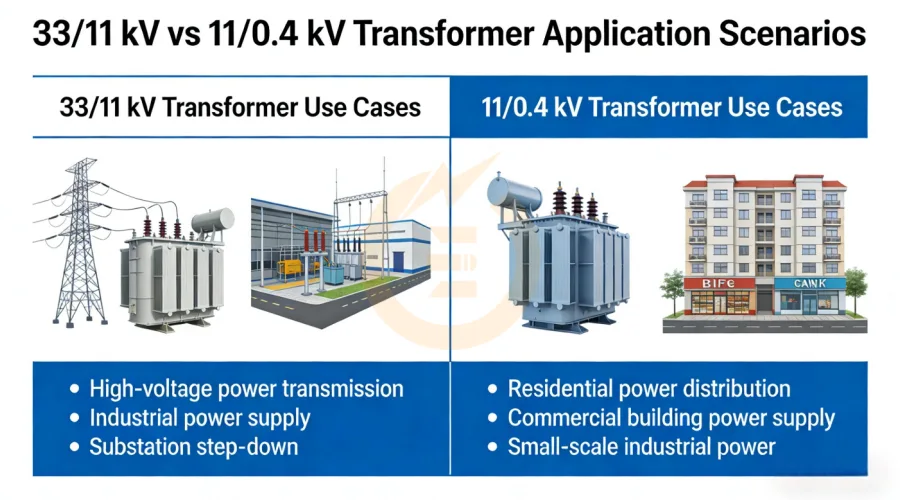
Applicazioni per settore
Trasformatori 33/11 kV:
-
Sottostazioni urbane e rurali
-
Grandi complessi industriali
-
Integrazione delle energie rinnovabili (parchi solari/eolici)
-
Operazioni di estrazione mineraria e industria pesante
11/0,4 kV Trasformatori:
-
Fabbriche e laboratori
-
Comunità residenziali ed edifici commerciali
-
Parchi industriali su piccola scala
-
Sistemi di alimentazione di backup e di emergenza
⚡ Suggerimento per gli EPC: Utilizzo trasformatori modulari 11/0,4 kV a valle dei trasformatori da 33/11 kV semplifica la gestione del carico e riduce il rischio di fermo macchina.
Differenze di costo e considerazioni sull'acquisto
Fattori che influenzano il costo dei trasformatori 33/11 kV:
-
Capacità e carico nominale: Maggiore kVA → prezzo più alto.
-
Tipo di raffreddamento: L'ONAN è più economico dell'ONAF o dell'OFAF.
-
Materiale: I trasformatori con avvolgimento in rame sono più costosi di quelli in alluminio.
-
Standard e certificazioni: Conformità agli standard IEC, ANSI o locali.
Fattori che influenzano il costo dei trasformatori 11/0,4 kV:
-
Quantità necessaria: Le reti possono richiedere più unità.
-
Tipo di montaggio: I trasformatori montati su pali sono più costosi di quelli montati su pali.
-
Ambiente di applicazione: Il tipo a secco per interni può essere più costoso in condizioni difficili.
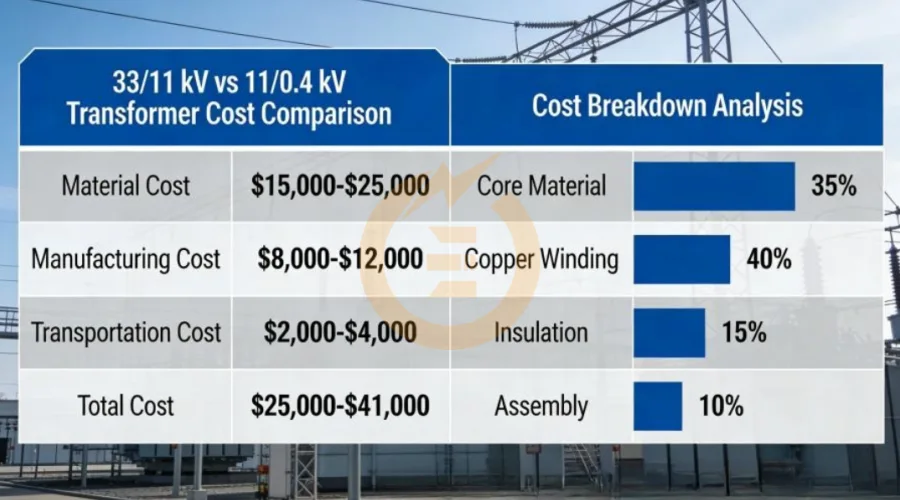
Esempio di prezzo tipico (EXW Cina, 2026):
-
33/11 kV, 1 MVA, a bagno d'olio: $12.000 - $18.000/unità
-
11/0,4 kV, 500 kVA, montato su piastra: $3.500 - $5.000/unità
🔹 Suggerimento per gli acquisti B2B: Considerare il costo totale della rete, non solo il prezzo unitario. Un trasformatore da 11/0,4 kV più economico può aumentare le spese di installazione e manutenzione se non è dimensionato correttamente.
Scegliere il trasformatore giusto per il progetto
-
Analizzare i requisiti di carico: Adeguare la capacità dei trasformatori alla domanda di picco e alla crescita futura.
-
Valutare i livelli di tensione: Garantire la compatibilità a monte e a valle.
-
Considerare l'ambiente: La scelta del design è dettata da condizioni esterne, interne o difficili.
-
Controllare la conformità e la garanzia: Gli standard IEC/ANSI e la garanzia del produttore riducono il rischio operativo.
-
ROI a lungo termine: Bilanciare il CAPEX iniziale con l'OPEX, la manutenzione e i rischi di fermo macchina.
🌐 Vantaggio del trasformatore di energia: Forniamo trasformatori certificati da 33/11 kV e 11/0,4 kV su misura per progetti industriali, commerciali e di pubblica utilità in Sud e Nord America, Europa e Asia.
Conclusione
Entrambi 33/11 kV e Trasformatori 11/0,4 kV svolgono un ruolo fondamentale nella moderna distribuzione dell'energia. Mentre il trasformatore da 33/11 kV gestisce in modo efficiente la distribuzione della rete a media tensione, il trasformatore da 33/11 kV gestisce in modo efficiente la distribuzione della rete a media tensione. Trasformatore 11/0,4 kV garantisce agli utenti finali un'alimentazione affidabile a bassa tensione.
Per gli acquirenti industriali, le utility e le società EPC, la scelta della giusta combinazione di trasformatori non è solo una questione di costi, ma anche di affidabilità, efficienza e successo operativo a lungo termine.
💡 Invito all'azione: Contatto Trasformatore di energia per consulenze, preventivi personalizzati e soluzioni di trasformatori chiavi in mano che soddisfano gli standard IEC/ANSI e garantiscono il massimo ROI.