



























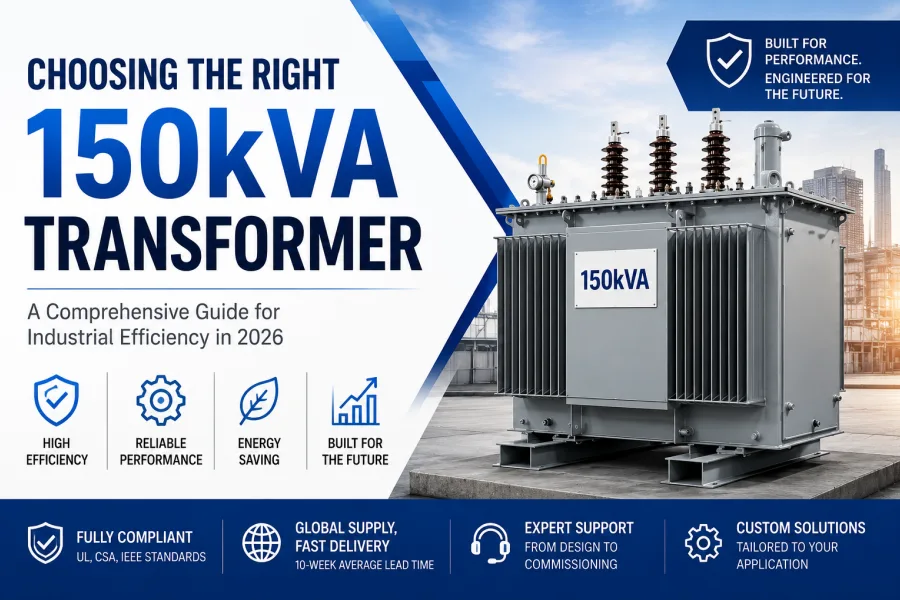
Introduction: The Backbone of Modern Power Distribution
In the rapidly evolving industrial landscape of 2026, the 150kVA transformer has emerged as the "Goldilocks" of power distribution—large enough to power substantial industrial machinery, yet compact enough for versatile placement in commercial complexes and EV charging hubs.
As global industries pivot toward decarbonization and smarter grids, the criteria for selecting a transformer have shifted. It is no longer just about stepping down voltage; it is about energy transparency, thermal resilience, and total cost of ownership (TCO). This guide explores everything you need to know about procuring, installing, and maintaining a 150kVA transformer to ensure your operations remain future-proof.
1. Understanding 150kVA: Capacity and Capabilities
Before diving into technical specifications, it is crucial to understand what "150kVA" actually represents in a real-world industrial environment.
kVA vs. kW: The Power Factor Cruciality
A common mistake in procurement is equating kVA (Apparent Power) directly with kW (Real Power). In a 150kVA unit, the actual usable power depends on your system's power factor (PF).
Formel: kW = KVA*PF
If your facility operates at a $PF$ of 0.8, your 150kVA transformer provides 120kW of real power. In 2026, with the rise of non-linear loads (like LED lighting and variable frequency drives), understanding harmonic distortions and their impact on your 150kVA capacity is vital for preventing overheating.
Why 150kVA?
This specific rating is the standard for:
Small to medium-sized manufacturing plant floors.
Large retail "Big Box" stores.
Multi-unit EV Level 3 DC fast-charging clusters.
Data center "grey space" power distribution.
2. Technical Specifications: Navigating the 2026 Standards
When sourcing for Europe or North America, "standard" is a relative term. You must ensure your 150kVA unit meets specific regional mandates.
Voltage Configurations
Most 150kVA transformers in industrial settings serve as Step-Down Transformers. Common configurations include:
Nord-Amerika: 480V Delta Primary to 208Y/120V Secondary (Ideal for balancing 120V office loads and 208V machinery).
Europe/International: 11kV or 20kV Medium Voltage Primary to 400/230V Secondary.
Efficiency Standards (DOE 2016 and Beyond)
In 2026, energy waste is a financial liability. In the U.S., transformers must comply with the latest DOE (Department of Energy) efficiency levels. High-efficiency units utilize laser-scribed grain-oriented silicon steel or amorphous metal cores to reduce "no-load" losses—the energy wasted even when the transformer isn't powering a load.
Mehr lesen:Single Phase Pad Mounted Transformer 10–167 kVA
3. Dry-Type vs. Liquid-Immersed: Which is Right for You?
The environment of your 150kVA transformer dictates its "skin."
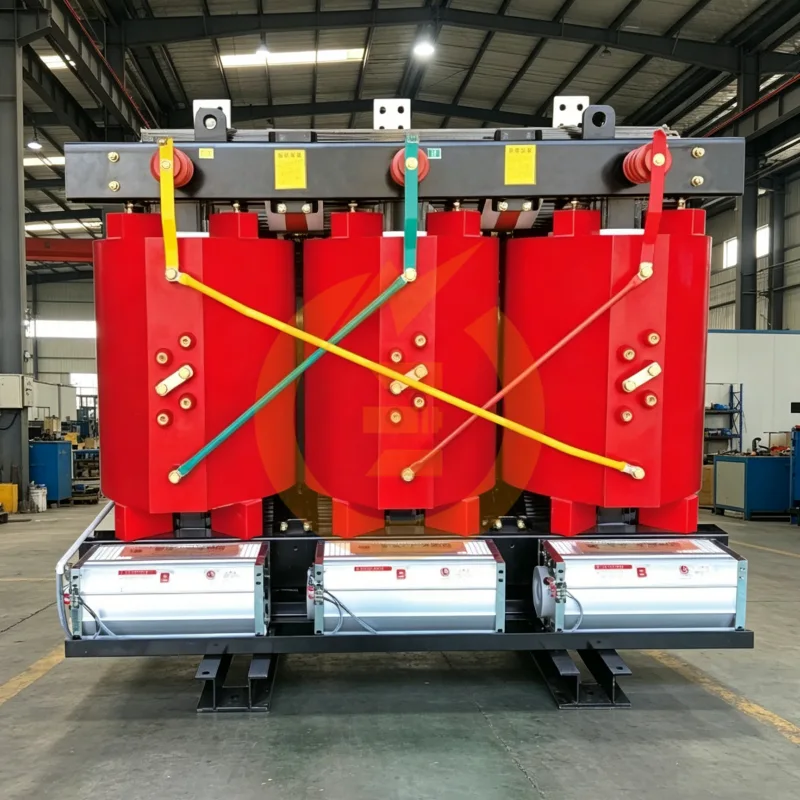
Trocken-Transformatoren (VPI or Cast Resin)
Best For: Indoor use, high-rise buildings, and hospitals.
Pros: Fire-resistant (no oil), lower maintenance, and environmentally friendly.
Cons: Larger footprint, more sensitive to harsh outdoor environments.
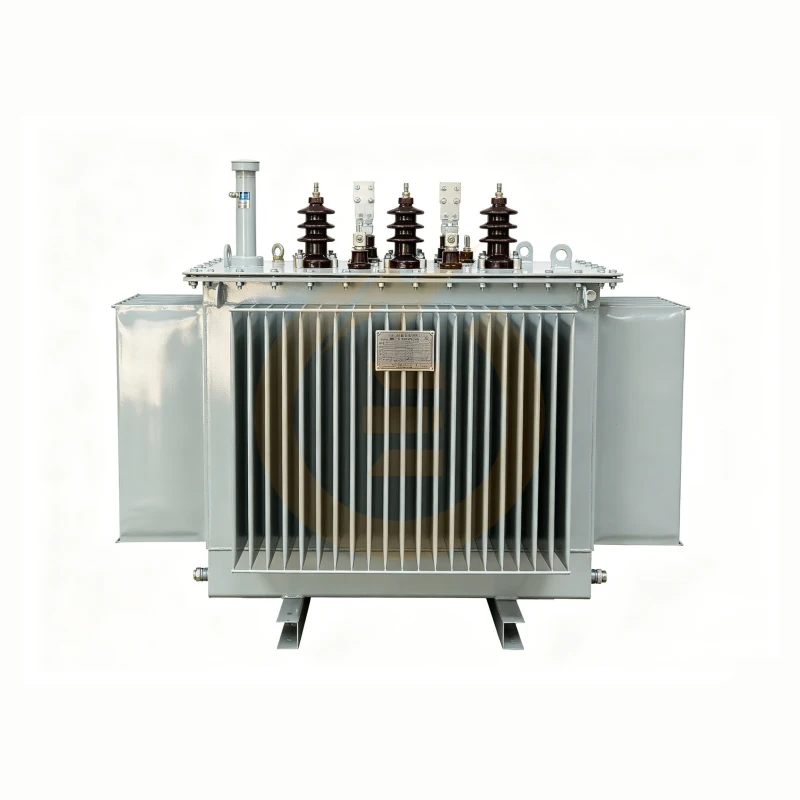
Liquid-Immersed (Oil-Filled) Transformers
Best For: Outdoor substations and heavy industrial sites.
Pros: Better cooling efficiency, longer lifespan in high-heat areas, and typically a smaller physical footprint than dry-type equivalents.
Cons: Requires spill containment (oil pits) and regular dissolved gas analysis (DGA).
4. Addressing the 2026 Supply Chain Crisis: Lead Times and Reliability
The biggest hurdle for Western EPC (Engineering, Procurement, and Construction) firms in 2026 isn't the price—it's the Vorlaufzeit.
Legacy manufacturers in the US and EU often cite 40–60 week lead times for standard 150kVA units. This is where strategic global sourcing becomes a competitive advantage.
The Chinese Advantage: Advanced manufacturing clusters in China have optimized the 150kVA production line, often offering 8–12 week delivery windows, including sea freight.
Quality Verification: Ensure your Chinese partner provides UL Listing, CSA Certification, or CE Marking. In 2026, "cheap" is expensive if it doesn't pass a local fire marshal's inspection.
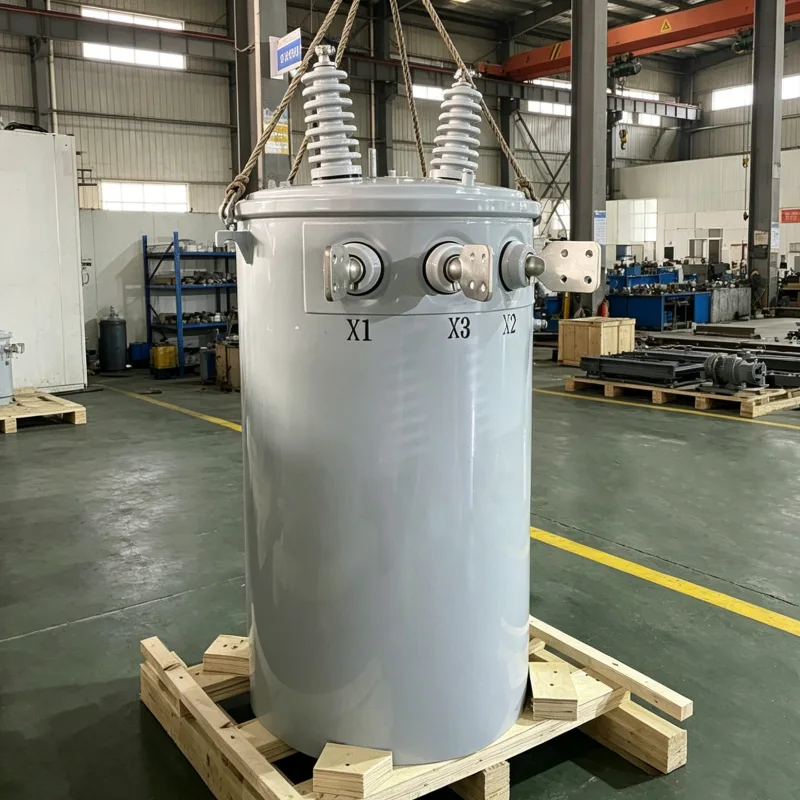
Mehr lesen:150 kVA Telephone Pole Transformer
5. Installation Best Practices and Safety
A 150kVA transformer is a significant investment; improper installation can cut its 25-year lifespan in half.
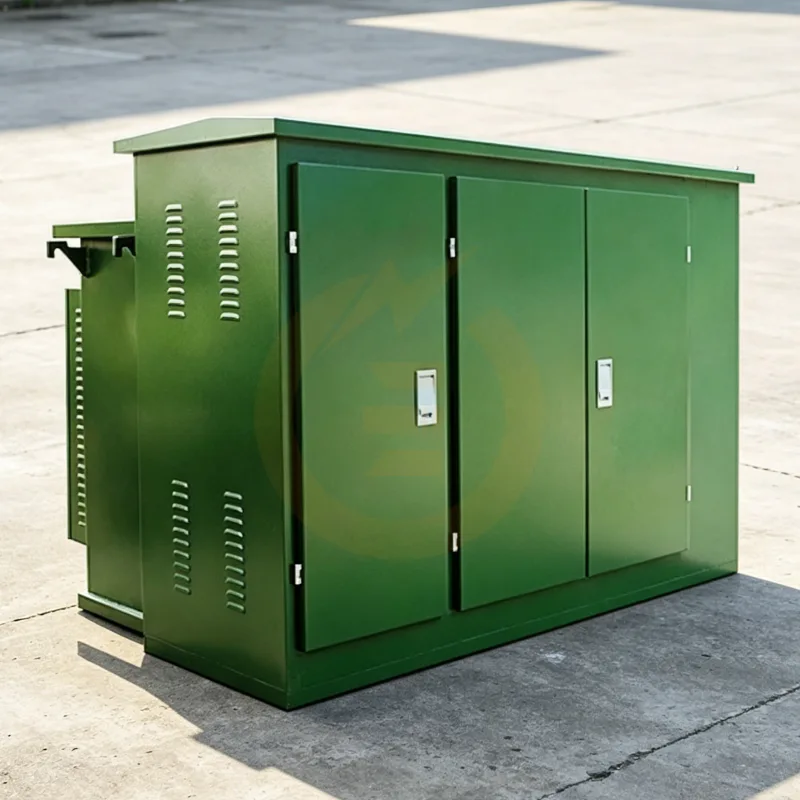
Foundation & Clearance: Ensure adequate airflow. For NEMA 3R outdoor enclosures, maintain a minimum of 6 inches of clearance from walls to allow for heat dissipation.
Grounding (The "Silent" Essential): Proper grounding is non-negotiable for 150kVA units to prevent transient surges from destroying downstream electronics.
Harmonic Mitigation: If your 150kVA unit is powering a server farm or VFD-heavy factory, specify a K-Factor rated transformer (e.g., K-4 or K-13) to handle the heat generated by non-linear loads.
6. The Total Cost of Ownership (TCO) Calculator
Don't buy on the "Sticker Price." A $10,000 transformer with 97% efficiency is more expensive over 20 years than a $13,000 unit with 99% efficiency.
The Math of 1%:
A 1% efficiency gain on a 150kVA transformer running at 75% load for 8,760 hours a year saves approximately 10,000 kWh annually. At $0.15/kWh, that’s $1,500 in annual savings, paying for the "premium" unit in just two years.
7. Future-Proofing: Transformers in the Age of Smart Grids
By 2026, "Dumb" transformers are being phased out. Modern 150kVA units now feature:
IoT Thermal Monitoring: Real-time sensors that alert your phone if the windings exceed $150^circ C$.
Digital Twins: Integrated QR codes that link to the unit’s specific test reports, CAD drawings, and maintenance history.
8. Conclusion: Making Your Decision
Choosing a 150kVA transformer in 2026 requires balancing immediate project needs (Lead Time) with long-term operational goals (Efficiency and Reliability). Whether you are upgrading an aging facility or building a new EV infrastructure, the transformer you choose today will dictate your energy costs for the next three decades.
Why Partner With Us?
At [Your Company Name], we specialize in high-performance 150kVA transformers engineered for the North American and European markets. Our units combine:
Vollständige Einhaltung der Vorschriften: UL, CSA, and IEEE standards.
Accelerated Delivery: 10-week average global lead time.
Custom Engineering: Specific primary/secondary voltages tailored to your site.
Häufig gestellte Fragen (FAQ)
Q: Can a 150kVA transformer handle a 200HP motor?
A: Generally, no. A 200HP motor requires roughly 150kW of power. Considering startup surge currents (which can be 6x the running current), you would likely need a 300kVA or larger unit, or a soft-starter/VFD.
Q: What is the standard weight of a 150kVA dry-type transformer?
A: Depending on the winding material (Copper vs. Aluminum), a standard 150kVA unit weighs between 1,100 lbs (500kg) and 1,600 lbs (725kg).
Q: Is Aluminum winding inferior to Copper in a 150kVA unit?
A: In 2026, no. While copper is more conductive, modern aluminum-wound transformers are engineered with larger cross-sections to match copper's performance while being significantly more cost-effective and lighter.
Ready to Power Your Project?
Don't let power distribution be your project's bottleneck.
Contact our engineering team today for a technical consultation and a transparent quote on our 150kVA transformer solutions.